
Foot Conditions Linked to Aging

Aging can significantly impact foot health by changing the structure, strength, and resilience of the feet. Over time, the supportive tissues weaken, and natural shock absorption decreases, leading to increased stress on bones and joints. This process can contribute to common conditions such as fallen arches, bunions, corns, and cracked heels. These issues are not only cosmetic but can also affect balance, walking ability, and overall comfort, making early recognition and management important.

Common symptoms associated with aging foot problems include persistent discomfort, visible deformities, thickened skin, and dryness. Fallen arches may result in foot fatigue and altered walking patterns. Bunions can cause pressure and irritation, especially when wearing tight shoes. Corns often develop in areas of repeated friction, leading to localized pain. Cracked heels may become deep and sensitive, sometimes leading to infection if not properly cared for. These symptoms can progress if left untreated and may limit mobility.


Several causes and risk factors contribute to these conditions. Years of repetitive use can weaken ligaments and alter foot alignment. Unsupportive or il- fitting footwear can accelerate structural changes. Weight gain increases pressure on the feet, while decreased circulation and skin elasticity make the skin more prone to dryness and cracking. Medical conditions such as arthritis can further impact joint health and mobility. These combined factors create an environment where foot problems are more likely to develop with age.


In summary, aging-related foot conditions are common but manageable with proper care and awareness. Addressing symptoms early and maintaining good foot health habits can help prevent complications and improve quality of life. If you or an elderly person in your care notice changes in the feet or have ongoing discomfort, it is suggested you consult a podiatrist for an accurate diagnosis and appropriate treatment plan.

Proper foot care is something many older adults forget to consider. If you have any concerns about your feet and ankles, contact Dr. Odin De Los Reyes from Connecticut. Our doctor can provide the care you need to keep you pain-free and on your feet.

The Elderly and Their Feet

As we age we start to notice many changes in our body, but the elder population may not notice them right away. Medical conditions may prevent the elderly to take notice of their foot health right away. Poor vision is a lead contributor to not taking action for the elderly.

Common Conditions 

  • Neuropathy – can reduce feeling in the feet and can hide many life-threatening medical conditions.
  • Reduced flexibility – prevents the ability of proper toenail trimming, and foot cleaning. If left untreated, it may lead to further medical issues.
  • Foot sores – amongst the older population can be serious before they are discovered. Some of the problematic conditions they may face are:
  • Gouging toenails affecting nearby toe
  • Shoes that don’t fit properly
  • Pressure sores
  • Loss of circulation in legs & feet
  • Edema & swelling of feet and ankles

Susceptible Infections

Diabetes and poor circulation can cause general loss of sensitivity over the years, turning a simple cut into a serious issue.

If you have any questions, please feel free to contact our offices located in Southbury and Farmington, CT . We offer the newest diagnostic and treatment technologies for all your foot care needs.

Read more about Taking Care of Elderly Feet

Reconstructive Foot Surgery Can Restore Mobility

Reconstructive foot surgery plays an important role in treating complex foot and ankle conditions that affect structure and movement. This type of procedure is designed to correct deformities, repair damaged tissues, and restore proper alignment. Individuals who suffer from chronic foot pain, instability, or visible deformities may benefit from surgery when non-surgical options are no longer effective. Advanced arthritis, severe injuries, congenital abnormalities, and progressive tendon disorders often require a more advanced solution.

The process begins with a detailed assessment to identify the underlying issue. A podiatrist evaluates bone structure, joint motion, and soft tissue health to determine the most effective treatment plan. Imaging studies help confirm the diagnosis and guide surgical planning. Each procedure is tailored to the patient’s specific needs, which may include bone realignment, tendon repair, or joint stabilization. The goal is to create a balanced and functional foot that can support daily activity without pain.


Post-surgical recovery is a critical phase that requires patience and commitment. Patients may need to limit weight-bearing activities and use assistive devices during the healing period. Rehabilitation focuses on restoring strength, flexibility, and balance. Proper footwear and orthotic support can help maintain the results of surgery and prevent future problems. With careful management, many individuals regain improved function and experience lasting relief.


Reconstructive foot surgery is not only about correcting a problem, but also about improving long-term mobility and comfort. Early evaluation can prevent further damage and reduce the need for more extensive procedures. If you have foot defects, injuries, or a foot infection and may need reconstructive foot surgery, it is strongly suggested that you consult a podiatrist to explore the best treatment options for your condition.

Foot surgery is sometimes necessary to treat a foot ailment. To learn more, contact Dr. Odin De Los Reyes of Connecticut. Our doctor will assist you with all of your foot and ankle needs.

When Is Surgery Necessary?

Foot and ankle surgery is generally reserved for cases in which less invasive, conservative procedures have failed to alleviate the problem. Some of the cases in which surgery may be necessary include:

  • Removing foot deformities like bunions and bone spurs
  • Severe arthritis that has caused bone issues
  • Cosmetic reconstruction

What Types of Surgery Are There?

The type of surgery you receive will depend on the nature of the problem you have. Some of the possible surgeries include:

  • Bunionectomy for painful bunions
  • Surgical fusion for realignment of bones
  • Neuropathy decompression surgery to treat nerve damage

Benefits of Surgery

Although surgery is usually a last resort, it can provide more complete pain relief compared to non-surgical methods and may allow you to finally resume full activity.

Surgical techniques have also become increasingly sophisticated. Techniques like endoscopic surgery allow for smaller incisions and faster recovery times.

If you have any questions, please feel free to contact our offices located in Southbury and Farmington, CT . We offer the newest diagnostic and treatment technologies for all your foot care needs.

Read more about Foot Surgery

Causes and Stages of an Ingrown Toenail

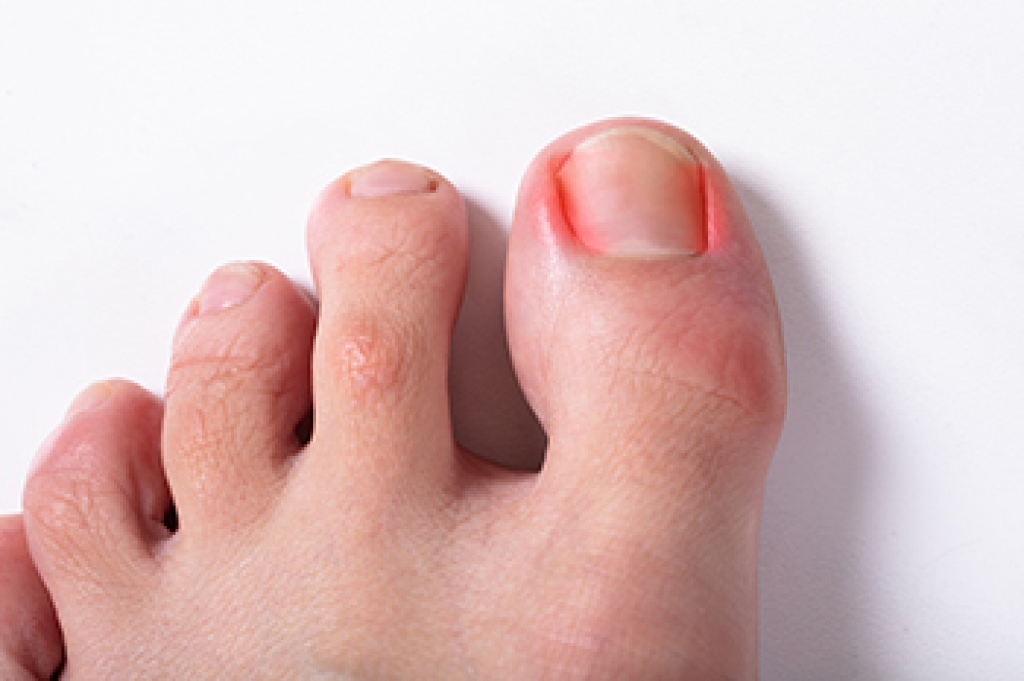
Ingrown toenails develop when the edge of the nail grows into the surrounding skin. This problem usually affects the big toe and can become painful while walking or wearing shoes. Common causes include trimming the nails too short, rounding the corners, and wearing tight-fitting shoes. Sweaty feet and injuries to the toes can also increase the risk. An ingrown toenail usually begins in Stage 1, which includes redness, swelling, and tenderness along the nail edge. Stage 2 develops when the skin becomes more irritated and starts to drain fluid or pus. The area can also become warm and more painful. Stage 3 is more serious and includes ongoing swelling, thickened skin, and signs of infection around the nail. A podiatrist can treat ingrown toenails with proper nail care, pressure relief, and other treatment methods that help the nail grow correctly again. If you have pain from an ingrown toenail, it is suggested that you make an appointment with a podiatrist for an exam and treatment options.

Ingrown toenails can become painful if they are not treated properly. For more information about ingrown toenails, contact Dr. Odin De Los Reyes of Connecticut. Our doctor can provide the care you need to keep you pain-free and on your feet.

Ingrown Toenails

Ingrown toenails occur when a toenail grows sideways into the bed of the nail, causing pain, swelling, and possibly infection.

Causes

  • Bacterial infections
  • Improper nail cutting such as cutting it too short or not straight across
  • Trauma to the toe, such as stubbing, which causes the nail to grow back irregularly
  • Ill-fitting shoes that bunch the toes too close together
  • Genetic predisposition

Prevention

Wearing proper fitting shoes and using proper cutting techniques will also help decrease your risk of developing ingrown toenails.

Treatment

Ingrown toenails are a very treatable foot condition. In minor cases, soaking the affected area in salt or antibacterial soaps will not only help with the ingrown nail itself, but also help prevent any infections from occurring. In more severe cases, surgery is an option. In either case, speaking to your podiatrist about this condition will help you get a better understanding of specific treatment options that are right for you.

If you have any questions, please feel free to contact our offices located in Southbury and Farmington, CT . We offer the newest diagnostic and treatment technologies for all your foot care needs.

Read more about Ingrown Toenails

Types of Arthritis in the Feet

Arthritis in the feet affects the joints and can cause pain, swelling, and stiffness that interfere with daily activities. Osteoarthritis is the most common type. It develops when the protective cartilage in the joints gradually wears down. This can lead to pain when walking, reduced flexibility, and joint swelling. Rheumatoid arthritis is an autoimmune disease that causes the immune system to attack healthy joint tissue. It commonly affects the same joints in each foot and can lead to inflammation, joint damage, and changes in foot shape. Psoriatic arthritis affects the joints and skin, causing swollen toes, thick toenails, and scaly skin patches. Gout is another painful form of arthritis that usually affects the big toe joint. It develops when uric acid crystals collect in the joint, leading to sudden pain, redness, and swelling. A podiatrist can diagnose the type of arthritis and provide treatment to reduce pain and improve movement. If you have symptoms of arthritis in the feet, toes, or ankles, it is suggested that you schedule an appointment with a podiatrist for effective relief and management tips.

Arthritis can be a difficult condition to live with. If you are seeking treatment, contact Dr. Odin De Los Reyes from Connecticut. Our doctor can provide the care you need to keep you pain-free and on your feet.

Arthritic Foot Care  

Arthritis is a term that is commonly used to describe joint pain.  The condition itself can occur to anyone of any age, race, or gender, and there are over 100 types of it.  Nevertheless, arthritis is more commonly found in women compared to men, and it is also more prevalent in those who are overweight. The causes of arthritis vary depending on which type of arthritis you have. Osteoarthritis for example, is often caused by injury, while rheumatoid arthritis is caused by a misdirected immune system.

Symptoms

  • Swelling
  • Pain
  • Stiffness
  • Decreased Range of Motion

Arthritic symptoms range in severity, and they may come and go. Some symptoms stay the same for several years but could potentially get worse with time. Severe cases of arthritis can prevent its sufferers from performing daily activities and make walking difficult.

Risk Factors

  • Occupation – Occupations requiring repetitive knee movements have been linked to osteoarthritis
  • Obesity – Excess weight can contribute to osteoarthritis development
  • Infection – Microbial agents can infect the joints and trigger arthritis
  • Joint Injuries – Damage to joints may lead to osteoarthritis
  • Age – Risk increases with age
  • Gender –Most types are more common in women
  • Genetics – Arthritis can be hereditary

If you suspect your arthritis is affecting your feet, it is crucial that you see a podiatrist immediately. Your doctor will be able to address your specific case and help you decide which treatment method is best for you.

If you have any questions please feel free to contact our offices located in Southbury and Farmington, CT . We offer the newest diagnostic tools and technology to treat your foot and ankle needs.

Read more about Arthritic Foot Care

Gout Pain Can Be Managed

Gout is a painful, inflammatory form of arthritis. Those affected will typically feel an intense stiffness in the joints of their feet, particularly in the big toe. Schedule a visit to learn about how gout can be managed and treated.

Connect With Us

Advanced Podiatric Procedures & Services in the New Haven County, CT: Southbury, Woodbury, Oxford, Seymour, Bethany, Naugatuck, Middlebury, Cheshire, Litchfield County, CT: Newtown, Roxbury, Bridgewater, Washington, Morris, Thomaston, Watertown, Hartford County, CT: Farmington, Avon, West Hartford, Simsbury, Bloomfield, Canton, Granby, Southington, Bristol, Middlesex County, CT: Middletown, Cromwell, Portland, East Haddam areas